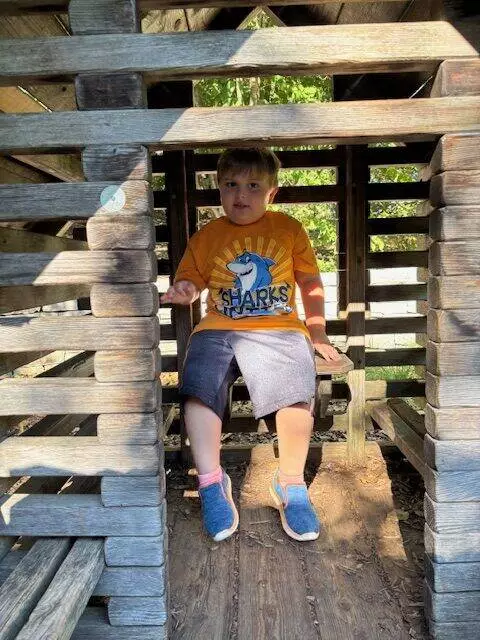
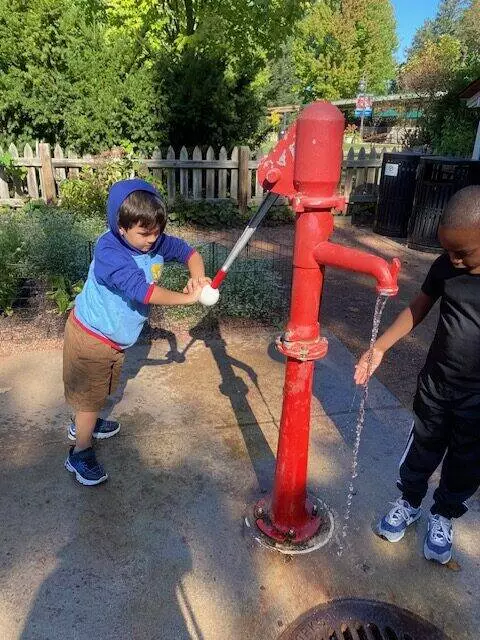
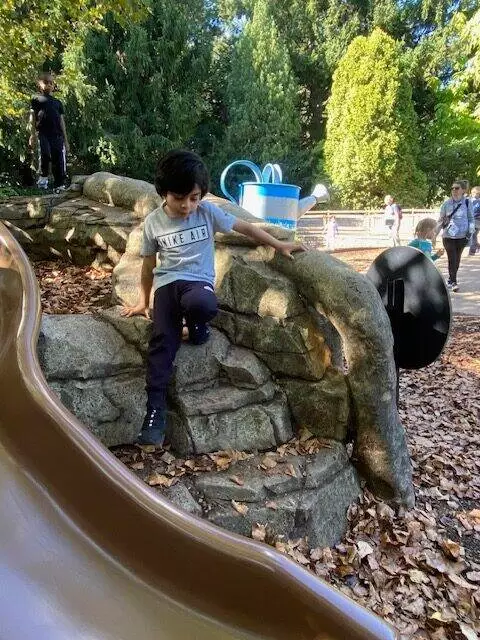
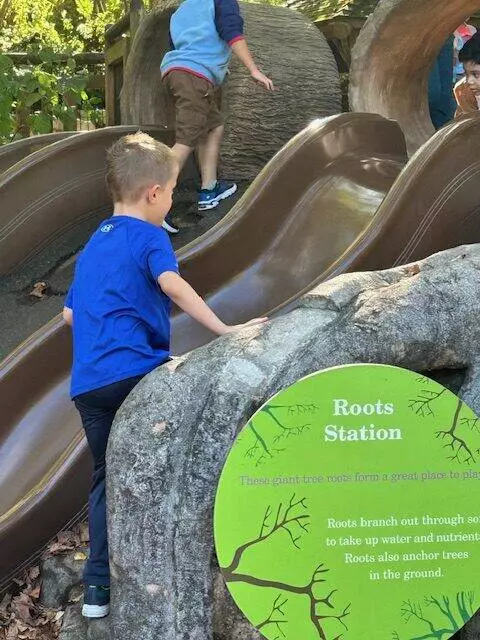
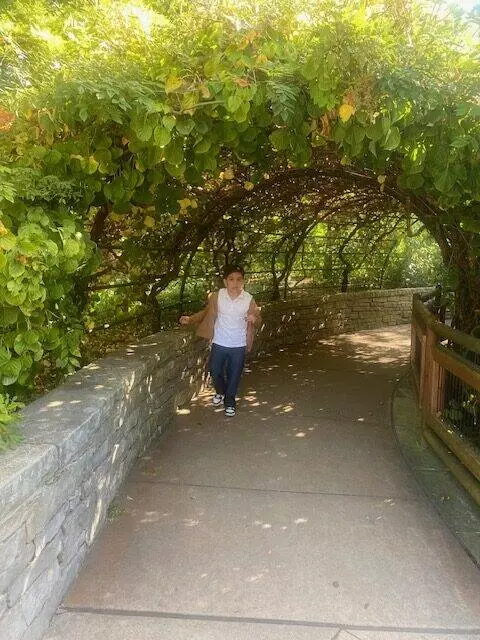
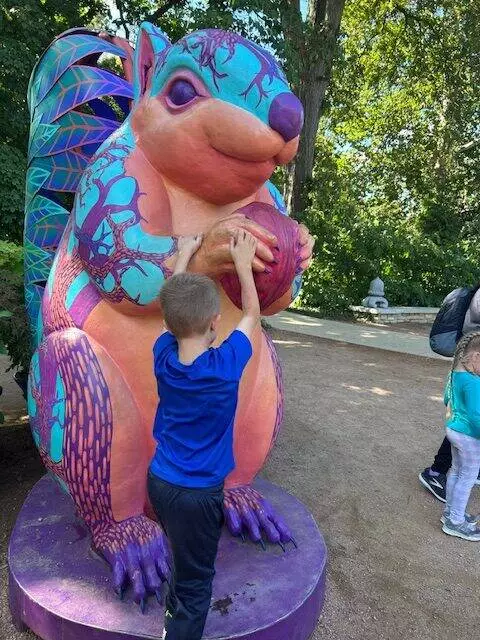
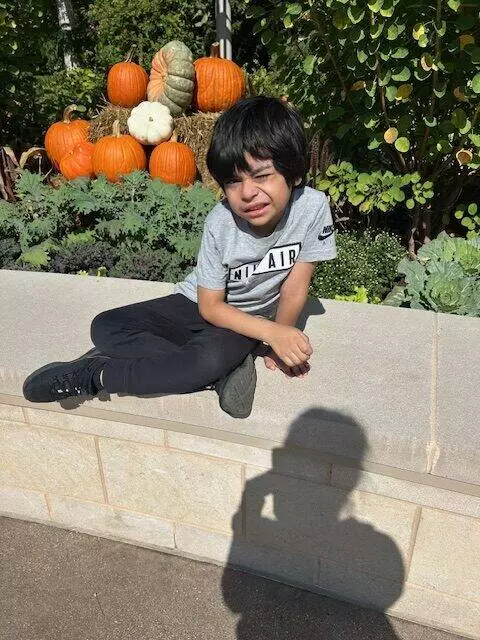
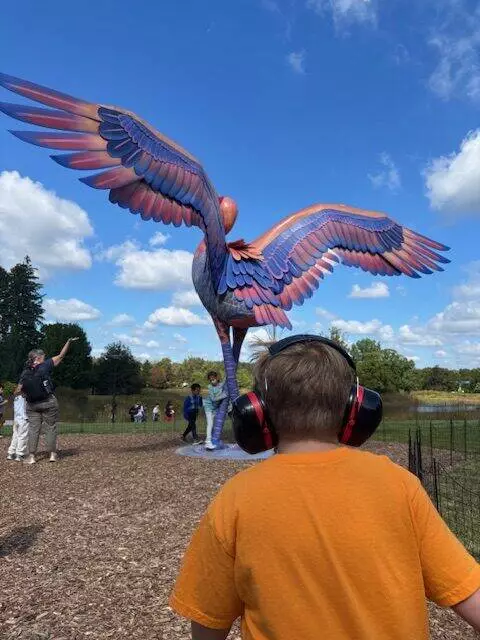
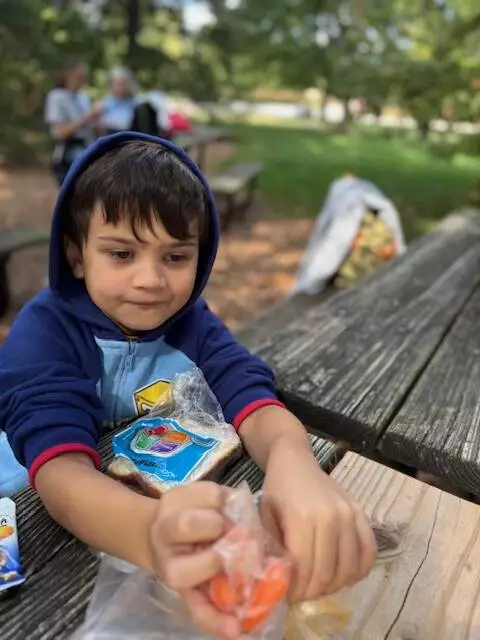
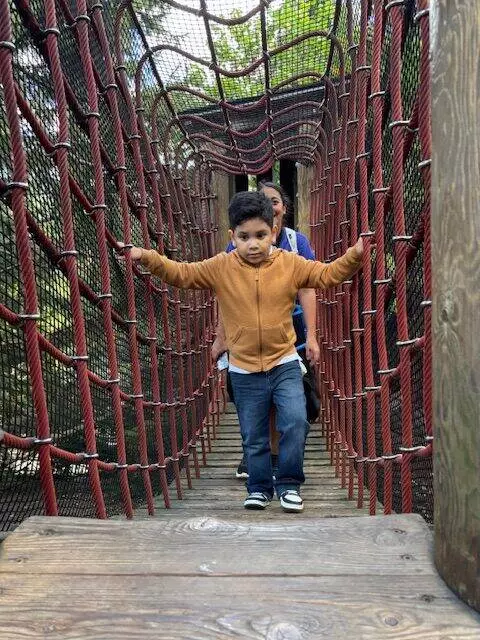
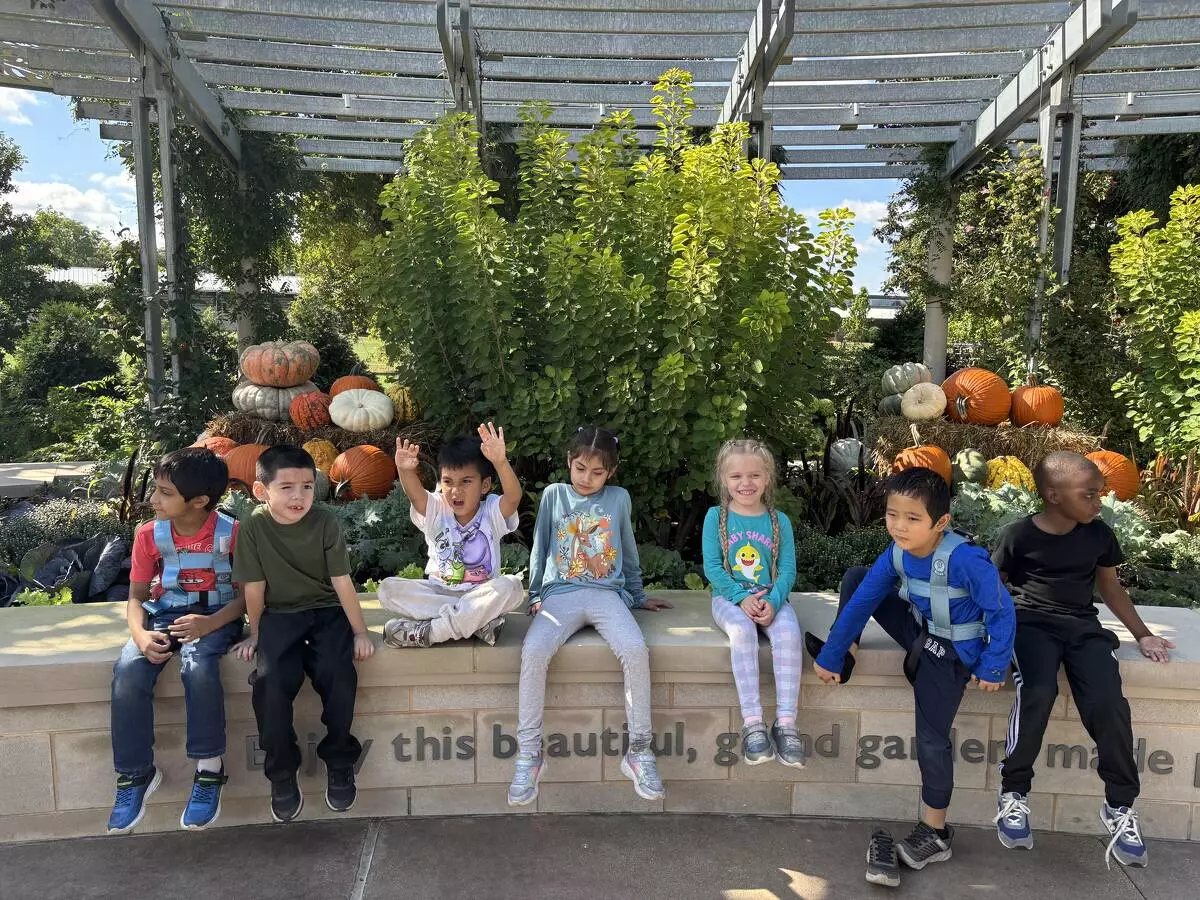
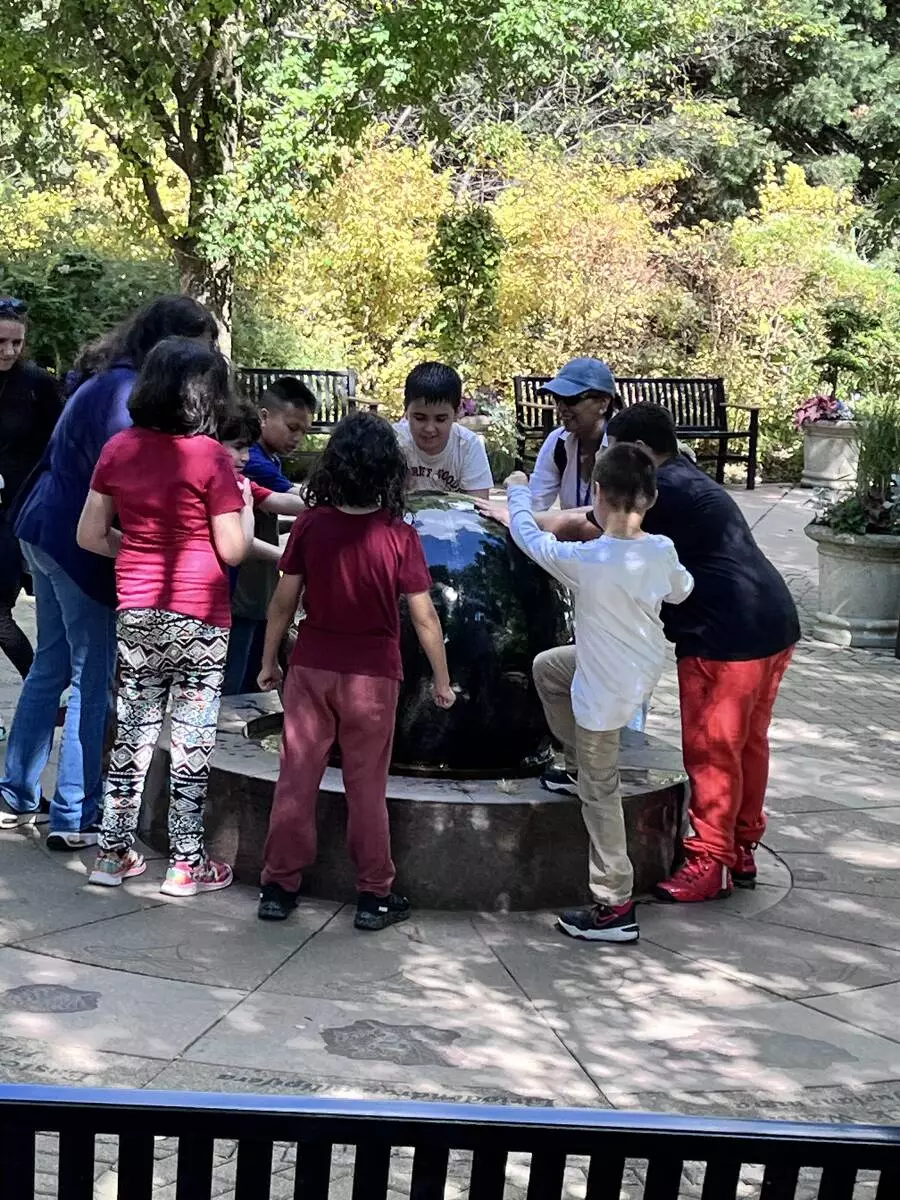
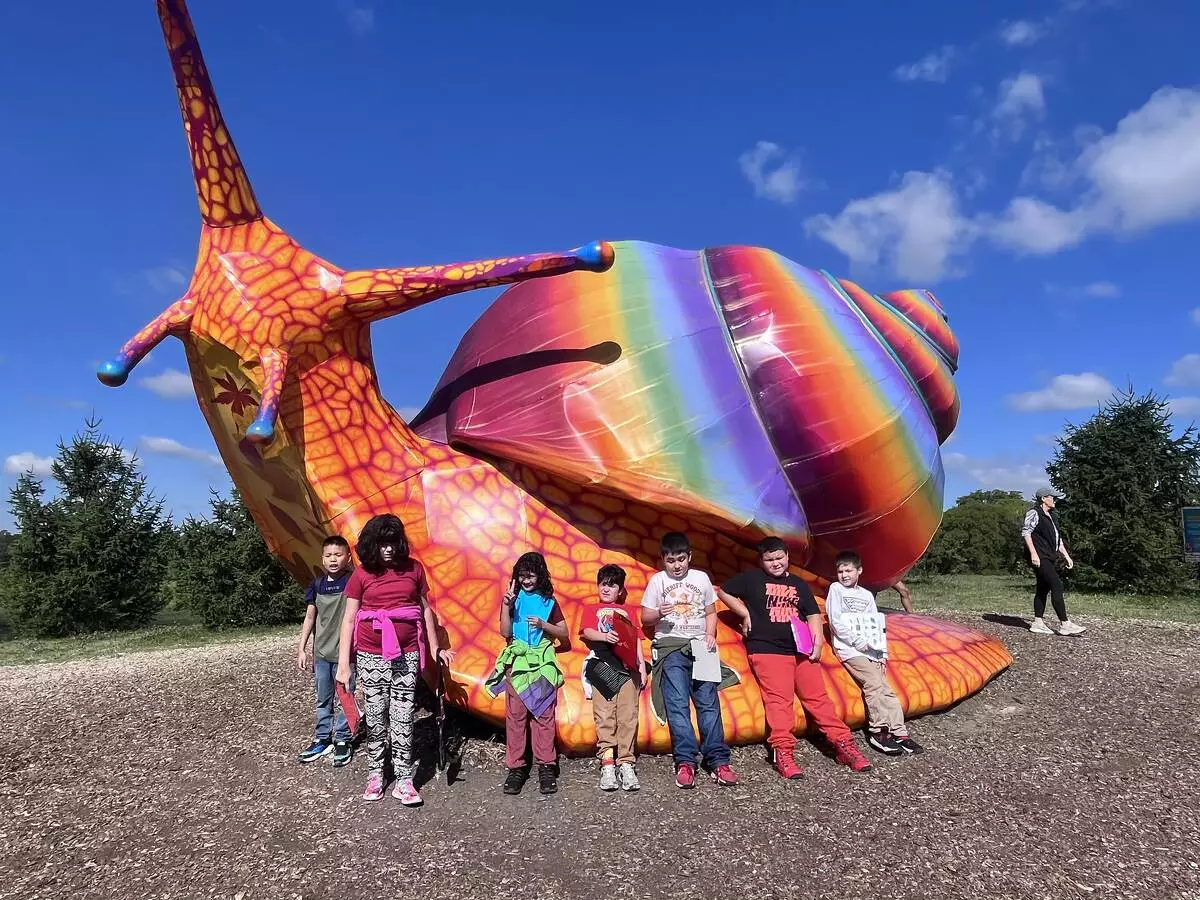
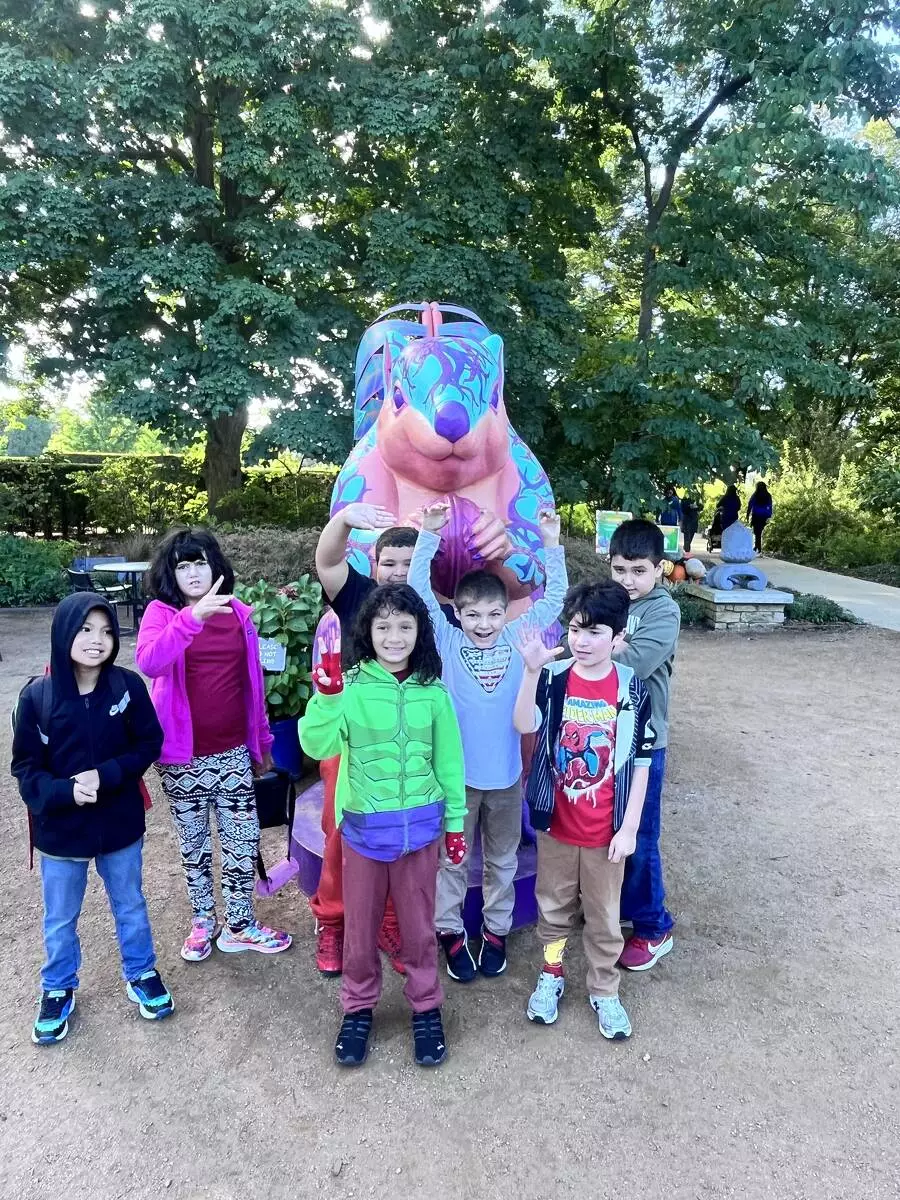
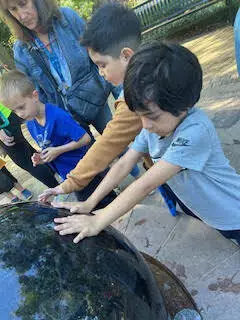
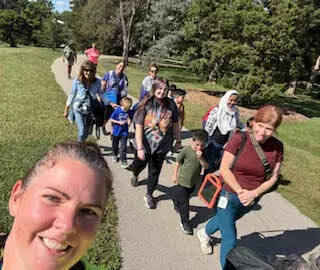
Students from the STARS program had an exciting and educational day during their recent field trip to the Morton Arboretum. Surrounded by the natural beauty, students engaged in hands-on learning experiences that brought classroom science lessons to life.
Primary-level students have been studying the life cycle of plants, and the Arboretum provided the perfect outdoor classroom to see this cycle in action. With guidance from teachers and Arboretum staff, students observed a wide variety of plant life. As they walked along the trails, the students excitedly pointed out different types of trees and plants, noting differences in color, shape, and size. A major highlight of the day was the leaf collection activity, where each student chose a unique leaf to bring back to school. These leaves were used in a follow-up activity where students described their leaf and created leaf rubbings, reinforcing observational and fine motor skills while connecting art to science.
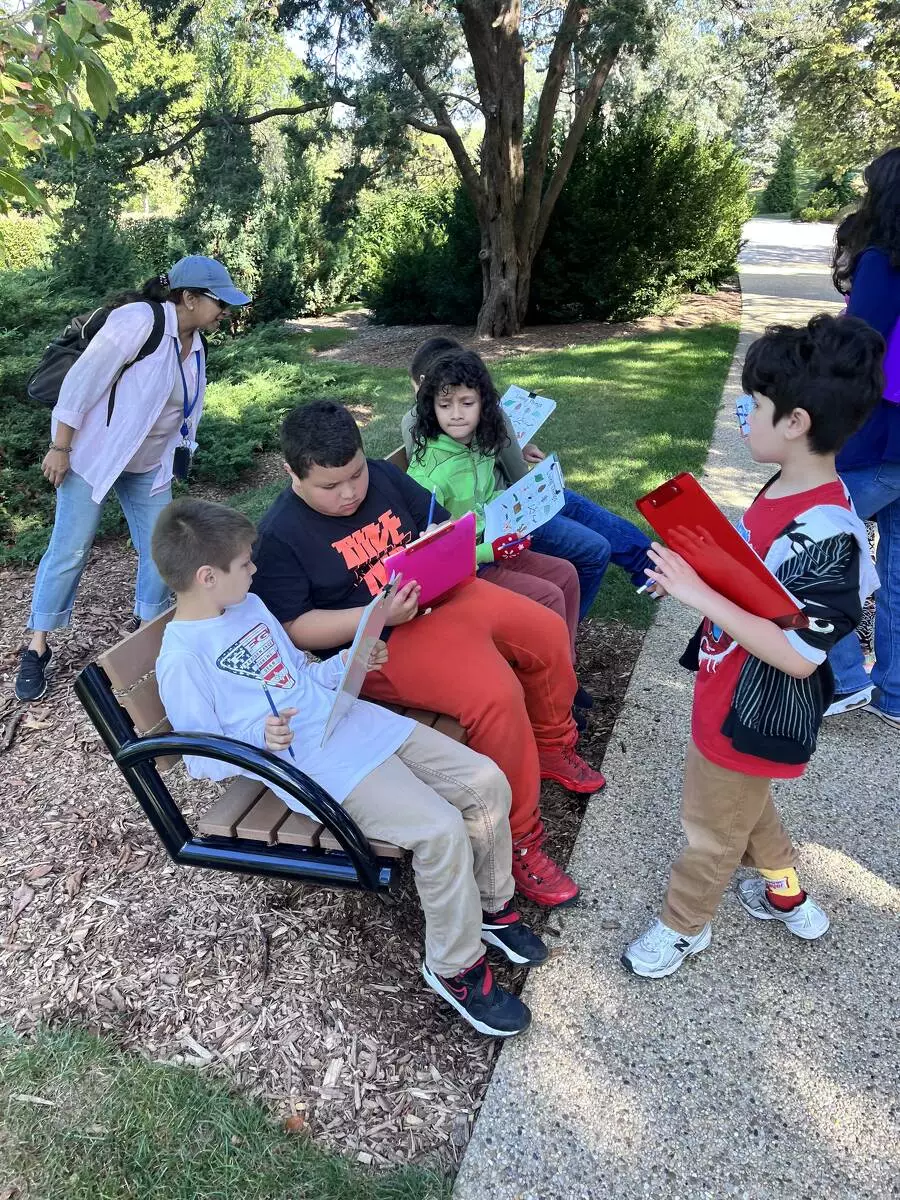
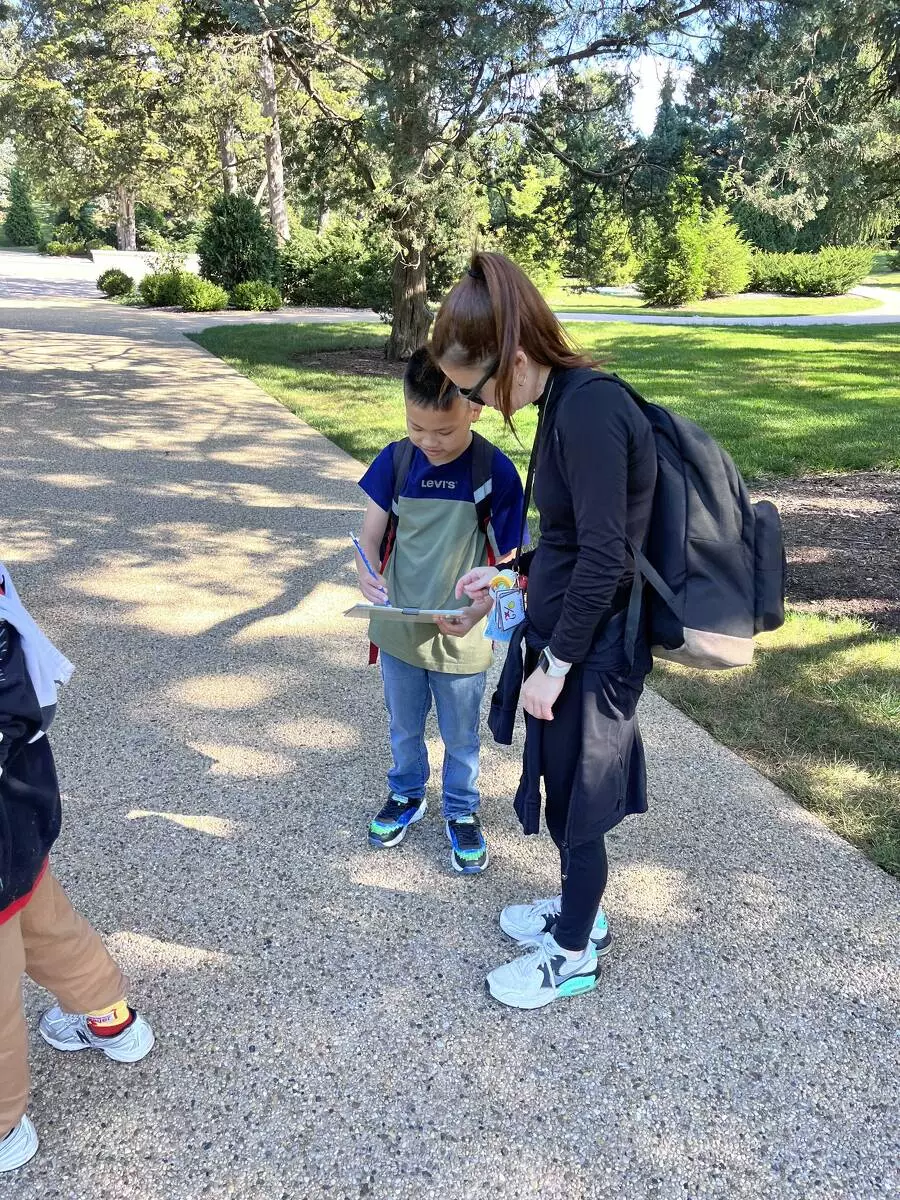
Intermediate students, who have been studying living vs. nonliving things, took part in a creative and engaging scavenger hunt throughout the Arboretum. STARS students searched the grounds to find examples of both living and nonliving things in nature. From insects crawling on logs to rocks along the trail, students carefully observed and discussed what characteristics make something alive and how these differ from nonliving items. The scavenger hunt encouraged critical thinking and gave students the opportunity to apply their classroom knowledge in a real-world setting.
The field trip to the Morton Arboretum highlighted the power of experiential learning and the importance of connecting curriculum to meaningful, real-life experiences. The STARS program continues to shine by giving students with Autism opportunities to learn, explore, and grow beyond the classroom.